
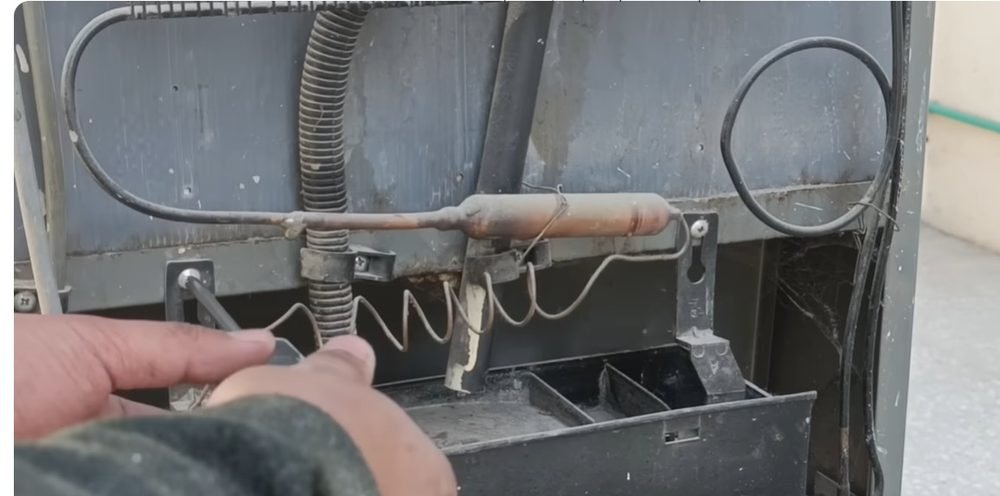
What is actually leaking — meltwater or supply water?
A refrigerator handles more water than people realize. Every defrost cycle melts frost off the evaporator coil and sends that water down a drain tube to a pan underneath, where it evaporates. The ice maker and dispenser add a second water system: a pressurized supply line, a valve, and a filter. A leak simply means water is escaping one of those two paths — meltwater going somewhere it should not, or supply water escaping under pressure.
Those two families behave very differently. A **meltwater leak** is bounded: it produces a puddle per defrost cycle, often in a rhythm — water under the crisper drawers, ice sheeting on the freezer floor, a small puddle at the front corner every day or two. A **supply leak** is unbounded: it flows whether the fridge runs or not, and it is the one that quietly destroys flooring. Telling them apart is the first and most valuable diagnosis you can make.
How can you tell where the water is coming from?
Before anyone opens a panel, answer three questions by looking.
**Where is the water?** Under the crisper drawers or on the freezer floor points to the defrost drain. At the front of the fridge, near one corner, suggests the drain pan or condensation overflow. Behind the fridge or spreading from the wall side is the supply line until proven otherwise — treat that as the emergency.
**When does it appear?** A puddle that shows up on a cycle, worse after humid days or heavy door use, is meltwater or condensation. A spot that is always wet, or a stain growing on the baseboard behind the unit, is pressurized supply water.
**What does the ice maker say?** Overflowing or misshapen cubes, a maker that cycles too often, or water frozen in the fill cup points at the inlet valve or fill tube — supply-side, but usually contained inside the freezer.
Two immediate actions cost nothing: dry the floor thoroughly so you can see whether and where water returns, and find the ice maker's shut-off valve (usually behind the fridge or under the sink) so you can close it in seconds if the leak turns out to be the line.
Fridge getting warmer while you read?
Describe the brand and the symptom — we will match you with a local pro who services your brand, with a written price range before any work starts.
Call (972) 555-0148Which leak checks are safe to do yourself?
Some of this is legitimately owner territory — with the fridge unplugged and the water supply off.
**Clear the defrost drain opening.** Inside the freezer, at the bottom of the back wall, is a small drain hole. Ice or debris plugs it. Flush it gently with warm (not boiling) water from a turkey baster until it runs free.
**Inspect the drain pan.** Pull the front grille and slide out the pan underneath. A cracked pan is an obvious, cheap fix; also clean the dust mat off the pan and coils while you are there — a pan that cannot evaporate because it is insulated in dust will overflow on humid weeks.
**Check the supply line by eye and hand.** Follow the line from the valve to the fridge. Kinks, frost splits in plastic tubing, and a damp compression fitting are all visible. Tighten a fitting a quarter-turn at most; replace a damaged line rather than taping it.
**Test the door gasket.** The dollar-bill test again: a gasket that will not grip lets 70°F-dew-point Colony air condense inside the cabinet all summer, and that condensation has to go somewhere.
Which leak causes need a professional?
Call a pro when the source is the **water inlet valve** (it leaks or overfills even with the maker switched off), when the drain tube is blocked deep in the cabinet wall, when the supply line's valve body itself is weeping, or when the leak has no rhythm you can match to a defrost cycle. Valve and dispenser repairs generally run $75–$200 in Angi's 2026 national data, and a water line repair $75–$150 — modest money, provided the floor survives.
The pros we connect you with also do the step owners cannot: pulling the unit out safely, checking the wall and floor behind it for hidden spread, and confirming the leak is dead after a full defrost cycle rather than just dry at the moment of the visit.
Why does a small leak matter so much in a Colony kitchen?
Here is the urgency nobody warns you about: refrigerators sit in the same spot for a decade, leaking onto the same boards. In The Colony, most homes are slab-on-grade with hardwood, engineered wood, or laminate through the kitchen — and laminate and engineered floors are the worst possible pairing with a slow fridge leak. Water wicks under the boards from the hidden back corner, swells the seams, and by the time the damage walks out from under the fridge where you can see it, the affected area is measured in square feet, not inches.
So the protocol is: dry what you can see, lift a toe-kick or check the adjoining room's baseboard for dampness, and if you find swelling, softness, or a musty smell, the leak has seniority — date it by the damage and escalate. A $150 drain repair is a nuisance. A kitchen floor is a renovation.
When should you call about a leaking refrigerator?
Call the same day for any supply-side leak you cannot stop with the shut-off valve, any leak that has reached the flooring, and any leak paired with electrical oddities — error codes, tripped breakers, a warm fridge — because water and the control board share a neighbourhood at the back of the unit.
ChillCrew is a referral service: we connect you with licensed local pros who serve The Colony; the pro performs the repair and invoices you directly. Tell us where the water appears and whether it is constant or cyclic — that one detail routes the visit, and the parts, correctly.
Frequently asked questions
How urgent is a fridge leak, really?
For a minor defrost-drain puddle you have already dried, the visit can usually wait a day. A supply-line leak cannot: it is under constant household pressure and will keep feeding water into the floor whether the fridge runs or not. Close the shut-off valve behind the fridge or at the manifold, and treat that one as same-day.
Does homeowners insurance cover fridge water damage?
Generally not. Standard homeowner policies typically cover sudden, accidental discharge — a burst supply line — but not the appliance repair itself and not damage from a slow leak that went unaddressed. Photograph everything, keep the failed part if it is replaced, and check your policy's wording before assuming either way. We are a referral service, not an insurer, so treat this as a prompt to call your agent.
Why is there water under my crisper drawers instead of on the floor?
That is the defrost drain or a freezing drain line until proven otherwise. Meltwater from the defrost cycle has nowhere to go, so it sheets down the back wall, pools under the crisper drawers, and freezes in layers on the freezer floor. It is one of the most common and most affordable leak repairs — and one of the easiest to misread as a failing fridge.
Can I fix a leaking water line myself?
Yes — that one is often an owner win. A kinked or frost-split plastic line and a loose compression fitting at the valve are visible, external, and fixable with the water shut off. If the leak is at the valve body itself or you cannot find the source, stop there: internal valve and drain work is pro territory.
The puddle only appears in summer. Is it just Texas humidity?
On the first warm day of a humid stretch, a fridge with clean coils and a healthy gasket may still sweat slightly. But recurring puddles in the same spot, ice building on the freezer floor, or water that returns a week after you dried everything is a pattern, not weather — and patterns are what pros diagnose.
Fridge trouble in The Colony? The food clock is running.
Water spreading from the fridge in The Colony? Shut the ice-maker supply valve, dry the floor, then call (972) 555-0148 — ChillCrew connects you with a licensed local pro before a small leak becomes a floor replacement.
Call (972) 555-0148