
Which freezers do the local pros repair?
The commonest patient is the freezer half of a French-door or side-by-side refrigerator — the same unit whose fridge section and ice maker we repair across The Colony. These share one cooling system, which is why a freezer complaint so often travels with a warm fridge or a dead ice maker, and why the diagnosis always looks at the whole appliance rather than one compartment.
Standalone freezers are the second fleet: uprights in garages and utility rooms, chest freezers holding deer-season and bulk-buy stock, and built-in freezer columns in The Tribute's larger kitchens. Lake households around Stewart Peninsula and Hidden Cove run second freezers hard through summer — boats come back, fish and brisket go in — and roughly two-thirds of Colony homes are detached single-family houses with the garage space to keep one. If it freezes food, the pros in our network work on it.
Built-in freezer columns and drawer units deserve a word of their own: they appear in The Tribute's remodelled kitchens and in higher-end Legends homes, and their sealed systems and electronics are serviced by pros who regularly handle premium brands, with parts lead times discussed honestly before the quote. At the other end of the shelf, the humble chest freezer in an Eastvale garage is often the most repairable appliance in the house — simple controls, one evaporator, and faults that usually reduce to a thermostat, a seal or a compressor that has simply worn out.
Why is my freezer frosted over, running constantly, or not cold enough?
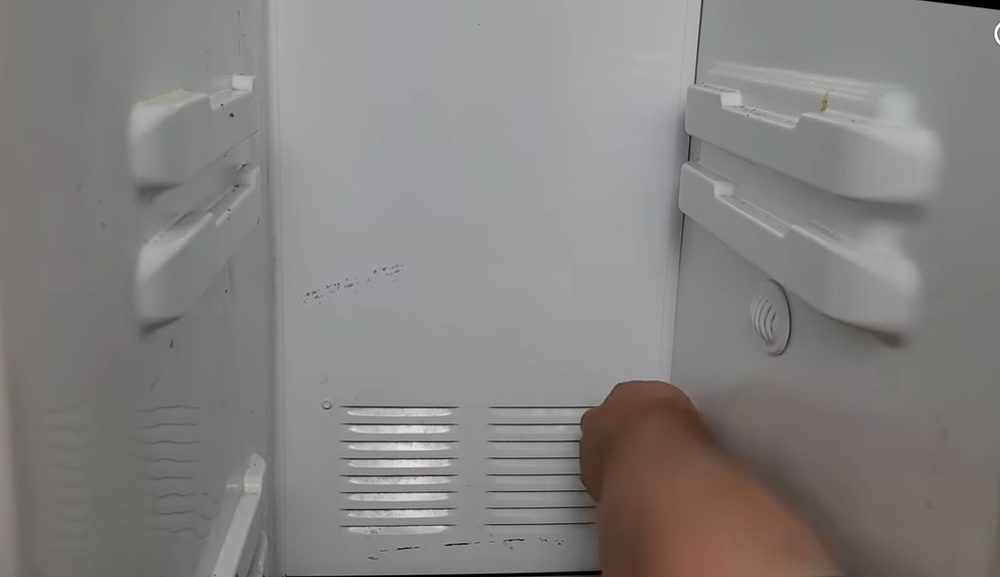
The symptom list is short and each entry has a usual suspect. Frost sheeting the back wall until it swallows the shelves means the automatic defrost system has failed — heater, sensor or board — so ice insulates the evaporator coil and chokes the fan until temperatures climb. A freezer that runs constantly but hovers at 15–20°F instead of 0°F points to airflow or a weakening compressor. Ice cream soft while frozen vegetables stay hard is the early-warning version of the same story: the unit is losing the fight slowly, often in step with the summer heat.
The Colony adds its own accelerants. Dew points near 70°F from June through August mean every door opening admits air carrying real moisture, which freezes on the coldest surface it finds — and a tired door gasket in that humidity sweats, frosts and leaks cold air around the clock. Dirty condenser coils on garage units, matted with dust and pet hair, do the rest. Our freezer-not-freezing guide walks the full symptom tree, but the rule of thumb is simple: frost plus warming is a defrost fault, noise plus warming is a fan, and silent warming with a running compressor is the sealed system.
Fridge getting warmer while you read?
Describe the brand and the symptom — we will match you with a local pro who services your brand, with a written price range before any work starts.
Call (972) 555-0148Can a freezer survive a Colony garage in August?
Standard refrigerators and freezers are built to operate in rooms between about 50°F and 100°F. A Colony garage in August is neither: temperatures inside an uninsulated garage can climb past 110°F, and with the National Weather Service putting our normal overnight lows near 76°F, a garage freezer gets no cool hour in which to catch up. The compressor runs continuously, oil and refrigerant work harder than the design allows, and marginal parts — fans, relays, ageing compressors — fail in the heat first. DFW's 52 days at 100°F or hotter in 2026 made that a very long stress test.
The practical advice a good pro gives: check whether your unit is garage-rated before spending on parts (garage-ready models are built for a wider ambient range), clear the condenser coils, and keep the door seal honest. Also weigh the economics — ENERGY STAR notes a second refrigerator or freezer kept in a garage can waste around $125 a year in extra energy. If the unit is old and struggling, sometimes the right repair is a replacement conversation, and you deserve to hear that from the person quoting you.
Winter flips the problem. The Colony averages about 29 nights a year at or below freezing, and in a genuinely cold garage a standard freezer can stop working for the opposite reason: the room is already so cold that the thermostat is satisfied, the compressor rests, and frozen food quietly climbs toward thawing. Owners discover it during cold snaps and assume the worst. A pro can tell you in minutes whether you have a failure or a physics lesson — and whether a garage kit or a relocation solves it for good.
What should you do in the first hours when a freezer fails?
While the pro is coming, the clock is your friend only if you respect it. USDA guidance: a full, unopened freezer keeps food safe for about 48 hours without power or cooling, and a half-full one for about 24 hours — but only if the door stays shut. Every inspection peek spends that reserve. Keep the door closed, note when you first noticed the problem, and move nothing warm into the unit.
Deciding what survives is about temperature, not optimism: food that still contains ice crystals, or that a thermometer shows at 40°F or below, can generally be refrozen or cooked promptly. Anything that has sat above 40°F for more than two hours — and anything with an off smell or colour — goes out. When in doubt, throw it out is the USDA's phrase, and it is the right one: no freezer repair quote is improved by a case of food poisoning. Call (972) 555-0148 and tell us how full the freezer is and when it failed; that triage shapes how fast we try to get a pro to you.
Frequently asked questions
How much does freezer repair cost?
It shares the refrigerator price book in Angi's 2026 national data: fan, thermostat and defrost-system repairs typically run $100–$250, control boards $200–$500, and a compressor $300–$800. Standalone chest and upright freezers often land at the simpler end — many have no ice maker, no dispenser and a single evaporator to service. The number that matters is the written quote after diagnosis, and on a standalone freezer holding a few hundred dollars of food, deciding fast is usually worth more than shopping the quote.
Is heavy frost build-up on the back wall normal?
Some is. A light, even frost on packages in a humid week — The Colony's dew points sit near 70°F all summer — can be normal air moisture freezing on contact. Thick ice sheeting the back wall or frost forcing the door off its seal is not normal: that pattern means the automatic defrost system is failing. Once the fan ices solid too, temperatures climb and food is at risk. That is the moment for a diagnosis, not another defrost.
Can any freezer handle a Texas garage, or do I need a special model?
It depends on the ambient rating, and this is where Texas is unforgiving. Standard units are rated for rooms between about 50°F and 100°F; a Colony garage passes 110°F in August, and with overnight lows near 76°F the compressor never gets a cool hour to recover. A standard upright will work harder, run constantly, and die younger out there. Garage-rated models built for wider temperature ranges handle it far better, and a pro will check which kind you own before quoting parts.
Does a chest freezer last longer than an upright?
Usually the standalone — particularly a chest freezer. It has fewer systems to fail: no through-door ice, no dispenser, often a simpler defrost arrangement, and cold air that stays put when the lid opens. Upright freezers share more DNA with fridge-freezer combos and inherit their fan and defrost faults. The trade-off is convenience, not reliability. Either way, the commonest killers for both are the same: failed fans, tired door or lid seals in our humidity, and compressors worn out by hot rooms.
Fridge trouble in The Colony? The food clock is running.
Primary CTA: call (972) 555-0148 — lead with the food-safety clock for thawing-freezer calls. Secondary: freezer-not-freezing problem page link.
Call (972) 555-0148