
What does it mean when a refrigerator runs but will not cool?
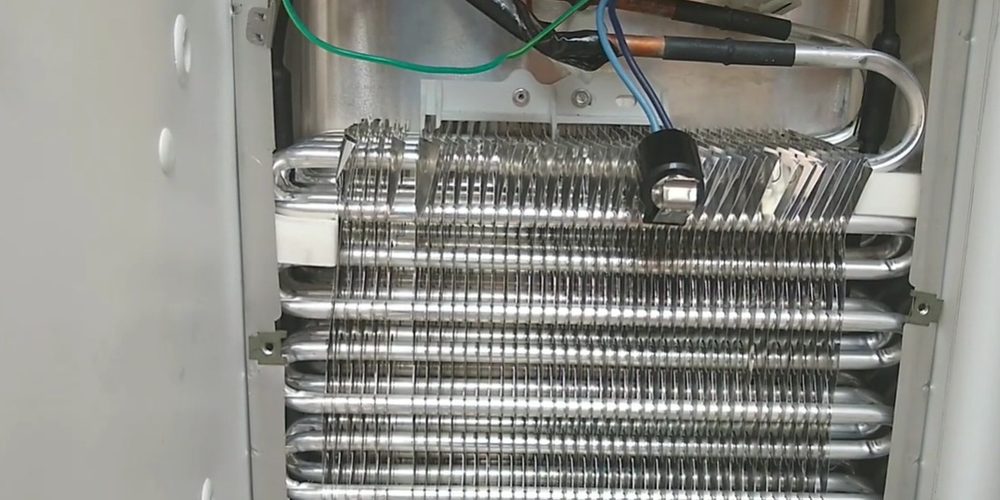
A refrigerator that runs constantly yet stays warm is telling you the cold is being made but not moved, or not made. Every fridge works the same way: the compressor circulates refrigerant through coils, the evaporator coil gets cold, and a fan blows that cold air into the freezer and then through a vent into the fresh-food section. When any link in that chain weakens, temperatures creep up.
The pattern tells you where to look. Freezer at 0°F but the fridge section at 48–55°F? Cold production is fine — airflow is the problem. Both sections warm with a normal-sounding compressor? The fault sits deeper. And The Colony's margin is thin: 52 days at 100°F or hotter in 2026. A fridge with dusty coils or a tired fan copes in April and fails outright in August.
Warm food is the other clock running: per USDA guidance, perishables held above 40°F for more than four hours should be discarded. Rule the simple causes out fast — and recognize the ones where guessing costs you a compressor.
Which safe checks can you do before calling anyone?
Five checks, in order — none needs more than a flashlight and a vacuum, and none involves sealed panels or wiring.
- 1. **Temperature settings.** Confirm the fridge is set to 37–38°F and the freezer to 0°F. Settings get bumped during cleaning more often than owners realize.
- 2. **Blocked vents.** Air vents sit in the freezer's back wall and the fridge's rear corners. A pizza box or a bag of peas parked against them starves the fridge section. Leave a couple of inches of clearance.
- 3. **Overpacking.** A fridge stuffed wall-to-wall after a warehouse-store run cannot circulate air. If cooling went bad after a big shop, redistribute first and wait.
- 4. **Door gasket.** Close the door on a dollar bill at several points. If it slides out with no resistance, warm humid air is leaking in — a worn gasket, and at our 70°F summer dew points that leak also grows frost inside.
- 5. **Condenser coils.** Usually underneath or behind the unit. A mat of dust insulates them so the fridge cannot shed heat. Unplug, remove the grille or rear panel, and vacuum them clean.
Fridge getting warmer while you read?
Describe the brand and the symptom — we will match you with a local pro who services your brand, with a written price range before any work starts.
Call (972) 555-0148What if the fridge is clicking, buzzing, or making a chattering noise?
Noise is a symptom worth its own section, because Colony homeowners describe it constantly — and each sound points somewhere different.
A repeated **click every few minutes** from the bottom rear is often the start relay failing to start the compressor, or a compressor overheating and tripping its overload. A fridge that clicks, hums, then goes quiet is not cooling even if it sounds busy.
A **buzzing that lasts a few seconds** can be normal (the ice maker calling for water), but loud buzzing with poor cooling suggests the compressor or its relay is straining.
A **chattering, ticking, or rattling from inside the freezer** that changes when you open the door is the classic signature of the evaporator fan blade striking frost. The fan sits behind the freezer's back panel; when the defrost system falls behind, frost grows into the blade's path. Pressing the door switch stops the fan — and the noise — which confirms the location.
Fan-hitting-ice is rarely just a fan problem — it is the defrost system announcing itself: heater, thermostat, sensor, or board. Replacing the fan without fixing the defrost fault buys a few quiet weeks, then the same noise again.
Which causes need a professional diagnosis?
Once the owner checks are done, the remaining causes live behind panels or inside the sealed system. The local pros we connect you with test these in order, cheapest evidence first.
The **evaporator fan motor** is the most common component failure: if it stops, the freezer gets cold and the fridge section starves. The **defrost system** — heater, thermostat, sensor — fails silently until frost strangles airflow. The **start relay** is a small, cheap part that can keep a healthy compressor from starting. The **control board** governs all of it and is a known casualty of storm-season surges — boards often fail days after a bad storm, not during it. Last and rarest, the **sealed system**: a failing compressor or refrigerant leak, diagnosed with gauges and electrical testing, not guesswork.
| What you notice | Most likely cause | Who can fix it |
|---|---|---|
| Freezer cold, fridge warm | Evaporator fan or frost-choked coil | Pro (fan/defrost parts) |
| Both sections warm, compressor silent | Start relay or control board | Pro (electrical testing) |
| Clicking every few minutes | Start relay / compressor overload | Pro — do not keep resetting it |
| Chattering from freezer wall | Fan blade striking frost (defrost fault) | Pro (defrost system) |
| Warm after a big shop or move | Blocked vents or overpacking | Owner check first |
| Runs nonstop, coils dusty | Dirty condenser coils | Owner cleaning first |
What does the repair itself actually involve?
For fan, defrost, relay, and board faults, the repair is a component swap: the pro confirms the failed part electrically, replaces it, and verifies temperatures over a full cooling cycle. Most of these jobs are done in a single visit once the part is in hand — the fridge never leaves your kitchen.
Sealed-system work is the heavy end: recovering refrigerant, brazing in the compressor and a filter drier, evacuating and recharging — plus a software update on many modern units. That is licensed work, and a pro should be able to show you test results, not just a suspicion.
How much does it cost to fix a refrigerator that is not cooling?
Based on Angi's 2026 national data, a typical refrigerator repair runs $150–$400, with labour at $50–$150 per hour. The not-cooling causes spread across that range: fan motors and defrost parts run $100–$250, control boards $200–$500, and compressor work $300–$800. French-door models — the dominant style in The Colony's 2000s housing stock — typically total $250–$600 per repair.
The pros we connect you with quote the job after diagnosis, before work begins, and invoice you directly. Use these ranges to judge whether a quote makes sense — not as a promised price.
When should you stop troubleshooting and call?
Call the same day if food temperatures are rising, if the compressor is clicking on and off, or if you see frost on the freezer's back wall. Call before the weekend if the fridge section has sat above 40°F for a day despite clean coils and clear vents — every extra day risks the full contents.
ChillCrew is a referral service: one call to (972) 555-0148 connects you with a licensed local pro who handles the diagnosis, the repair, and the invoice. Tell us the brand, the model if you can read it, and which section is warm — that split tells an experienced tech where to start.
Frequently asked questions
How long can food stay safe in a refrigerator that stopped cooling?
USDA guidance is about four hours once the interior passes 40°F, door kept closed. After that window, perishables — milk, eggs, meat, leftovers, soft cheeses — should be discarded. When in doubt, throw it out: a restock costs less than a stomach illness.
Can Texas heat alone make a healthy fridge stop cooling?
Heat exposes weak fridges first. A sound refrigerator handles a 100°F Colony kitchen, but one with dusty coils, a worn gasket or a tiring fan loses its margin in July and August — DFW recorded 52 hundred-degree days in 2026. Cooling that fails every summer and recovers in fall is a component warning, not bad luck.
Is it worth repairing a fridge that is not cooling, or should I replace it?
The working rule: repair if the unit is under about ten years old and the repair costs less than half the price of a new fridge (new units run $1,000–$3,000). A $100–$250 fan or defrost repair on a seven-year-old French door makes sense; a compressor quote on a twelve-year-old unit deserves a second opinion.
Why did my fridge stop cooling right after a thunderstorm?
Surges and brownouts commonly damage control boards and start relays, and the failure can show up a day or two later. If the fridge went warm after a storm, mention it when you call — it moves the board and relay to the top of the test list, saving a round of diagnosis.
Do the technicians work for ChillCrew?
No. ChillCrew is a referral service, not the repair company. We connect you with licensed, independent local pros who serve The Colony; the pro performs the work, provides any parts and labour warranty, and invoices you directly. Our job is the honest match — including telling you when it sounds like an owner fix.
Fridge trouble in The Colony? The food clock is running.
Fridge warming up in The Colony? Call (972) 555-0148 — ChillCrew connects you with a licensed local pro who can diagnose it today. Food crosses the safety line in four hours, so do not wait out the weekend.
Call (972) 555-0148