
Why does summer break more refrigerators than any other season?
The Dallas–Fort Worth climate does not ease a refrigerator into summer; it leans on it. National Weather Service normals show average highs of 95.6°F in July and 95.8°F in August, with 20.2 days a year at or above 100°F on average — and 2026 delivered 52 such days, tied for fifth-highest on record. A refrigerator rejects its internal heat into your kitchen air, and when that air stays hot around the clock, with overnight lows near 76°F, compressors run longer cycles with shorter rests for three straight months.
The result is a failure season, not a failure lottery. The units that die in a Colony summer are rarely random: they are the ones carrying a hidden weakness — dusty coils, a tired condenser fan, a gasket that no longer seals, a compressor already near the end of its life. Summer does not create most fridge faults. It audits them, all at once, and the audit runs from June to September.
What breaks first: coils, fans and the compressor behind them
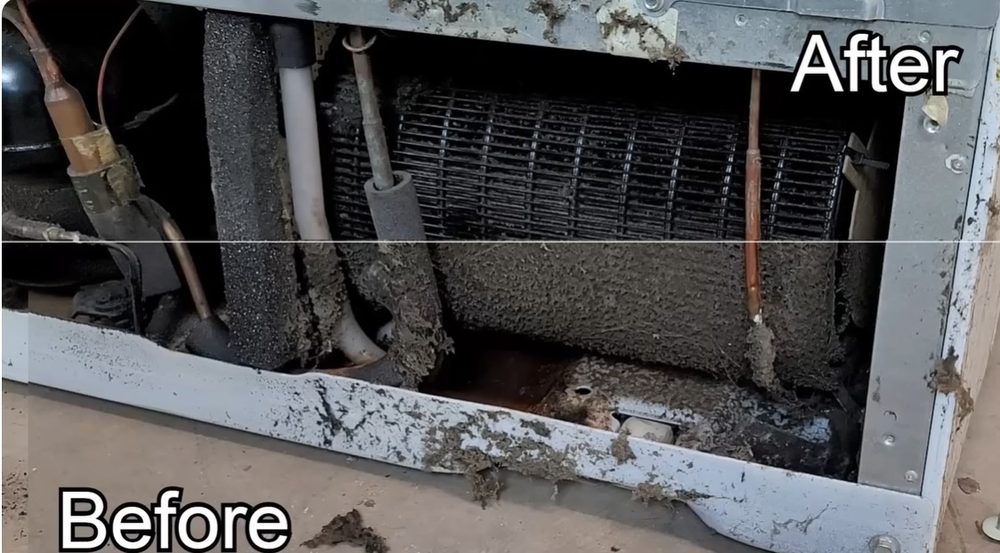
The first casualty of the season is usually the heat-removal chain, and it starts at the condenser coils. Those coils shed the heat pulled from inside the cabinet; when they are coated in kitchen grease, dust and pet hair — and Colony homes with dogs know how fast that builds — the fridge cannot shed heat efficiently. The compressor compensates by running longer, the cabinet temperature creeps up a degree at a time, and food starts lasting noticeably less long before anyone calls it a breakdown.
Next in line is the condenser fan, the small motor that blows air across those coils. It runs whenever the compressor runs, so summer triples its workload, and a fan that was merely noisy in April can seize in July. The early warnings are consistent: the fridge runs almost constantly, the strip between the doors feels hot to the touch, and cooling is uneven — freezer acceptable, fresh-food section drifting above 40°F. Caught here, these are among the most affordable repairs in the trade. Ignored, the overworked compressor becomes the story, and compressors are not cheap.
Fridge getting warmer while you read?
Describe the brand and the symptom — we will match you with a local pro who services your brand, with a written price range before any work starts.
Call (972) 555-0148How does 70-degree dew point humidity attack door seals?
Summer in The Colony is not only hot — it is wet air. Average dew points sit around 70°F from June through August, meaning every door opening admits air carrying serious moisture. Inside the fridge that moisture condenses on cold surfaces and frosts the evaporator; the defrost system handles a normal load, but a door gasket that no longer seals turns a managed process into a losing battle.
Watch the gasket for the tell-tales: condensation beading along the door edge, frost feathers building in one corner of the freezer, a dollar bill that slides out of the closed door with no drag. A failing seal in a Texas summer does double damage — it lets cold out and humidity in — and the frost it creates can choke the airflow that the fresh-food section depends on, producing the classic summer complaint: freezer cold, fridge warm, ice maker encased in frost. Gaskets are replaceable parts, and replacing one early is far cheaper than the compressor strain a leaky door causes over a full season.
Why do parties and ice demand push fridges over the edge?
The Colony's summer social calendar loads fridges in ways winter never does. Liberty by the Lake on the Fourth of July means houses full of guests, coolers rotating through the kitchen, and doors opening every few minutes. Warm drinks go in by the case; hot dishes get loaded before they have cooled; the ice maker runs its maximum cycles for a house party while the freezer absorbs the heat of every batch.
Ice makers are the hardest-working component of the summer fridge, and nationally they are also the most failure-prone: Consumer Reports found that ice makers and dispensers are the two most-reported refrigerator problems, and that around 31% of fridges with ice makers develop a problem by year five. Summer is when that statistic comes due — the fill valve cycles constantly, the ice room in a French-door model fights humid air at every opening, and a unit that limped through spring jams or freezes up in July. If your ice maker starts slowing down in June, treat it as a forecast, not a quirk.
What can you do this weekend to help your fridge through summer?
You cannot change the Colony summer, but you can change what your fridge brings into it. Vacuum or brush the condenser coils — on most models they sit underneath or behind, and ten minutes with a coil brush in May prevents the most common strain pattern of the season. Confirm temperatures with an appliance thermometer: 37–40°F in the fridge, 0°F in the freezer; settings dials lie, thermometers do not. Test each door seal with a banknote at several points, and clean the gasket with warm soapy water so it seats fully.
Finally, give the fridge its space: a couple of inches of clearance behind and above lets it shed heat, and inside, leave the air vents along the back wall unblocked by food so cold air can circulate. If, after those checks, the unit still runs constantly, cycles oddly or cannot hold 40°F, that is the moment to call — the fault is mechanical, and in July it will not improve on its own. Call ChillCrew on (972) 555-0148 and we will connect you with a licensed local pro.
Frequently asked questions
Why does my fridge feel warm after a party but fine the next day?
Count the door openings and what you put in, warm. Summer gatherings mean the fridge opens constantly, and every tray of room-temperature drinks or warm leftovers forces a long recovery cycle in a hot kitchen. A healthy fridge catches up by morning. If yours cannot recover overnight with the door staying shut, the problem is mechanical — coils, fan, gasket or compressor — not the party.
Is condensation on my fridge door normal in Texas humidity?
It can be. At a dew point around 70°F, the air holds a great deal of moisture, and a worn gasket lets that air in continuously. Light condensation on the door edge on the most humid days is cosmetic; persistent sweating, visible frost patterns inside the freezer, or water pooling under the crisper drawers point to a seal or defrost problem worth a diagnosis before it becomes a cooling failure.
What can I check myself before calling for summer fridge repair?
Start with the free checks: confirm the settings (37–40°F fridge, 0°F freezer), vacuum the condenser coils, make sure vents inside are not blocked by food, and test the door seal with a banknote — it should drag when you pull it out of the closed door. If temperatures are still above 40°F in the fridge after those steps, or the compressor runs constantly, the fault needs a pro rather than another adjustment.
Why do ice makers fail more in summer?
Yes — ice makers work hardest exactly when they are most likely to fail. Every batch of ice dumps heat into the freezer compartment, and constant demand means the fill valve, module and fan cycle far more than in winter. Combined with humid air leaking past the door seal at every opening, summer is when marginal ice makers jam, freeze up or quit, particularly in French-door models with the ice room inside the refrigerator section.
How fast can I get a repair during peak summer in The Colony?
In season: same-day appointments are often possible for not-cooling calls, particularly if you call in the morning and can name the brand and symptom. ChillCrew is a free referral service — call (972) 555-0148 and we will connect you with a licensed local pro serving The Colony who can give you a real arrival window. Summer is peak season for everyone, so the earlier in the day the call comes, the more options exist.
Fridge trouble in The Colony? The food clock is running.
Fridge already losing the fight against the heat? Call (972) 555-0148 — a free referral to a licensed local pro in The Colony.
Call (972) 555-0148